Grieving Catholics in Baghdad marked All Saints Day in mourning for 46 Christians killed in a US and Iraqi assault to free worshippers taken hostage at a cathedral by Al-Qaeda gunmen.
Mourners throughout Monday were seen carrying coffins containing bodies of the dead from out of the church and loading them onto vehicles for transfer to the morgue. Most of the victims were to be buried on Tuesday.
The rescue drama on Sunday night, two months after US forces formally concluded combat operations in Iraq, ended with two priests among at least 46 slain worshippers.
"It was carnage," said Monsignor Pius Kasha, whose Syriac Catholic church was targeted by the militants, whom witnesses said were all armed with automatic rifles and suicide belts.
"There were less than 80 people inside the church, and only 10 to 12 escaped unhurt," he said, giving an account that differed from the official Iraqi version. He said two priests were killed, and 25 worshippers were wounded, among them a priest who was shot in the kidney.
Thursday, November 4, 2010
Tuesday, November 3, 2009
Saturday, August 15, 2009
India doing little to protect its minorities...

A US congressional body has put India on a list of countries which have failed to protect its religious minorities adequately.
The US Commission on International Religious Freedom says India was added to the list because of a "disturbing increase" in religious violence.
It mentioned the anti-Christian and anti-Muslim riots in Orissa and Gujarat in 2008 and 2002 respectively.
India has not yet commented on its inclusion on the "watch list".
Other countries on the list include Afghanistan, Somalia and Cuba.
Leonard Leo, the chair of USCIRF, said that it was "extremely disappointing" that India has done "so little to protect and bring justice to its religious minorities under siege."
"India's democratic institutions charged with upholding the rule of law, most notably state and central judiciaries and police, have emerged as unwilling or unable to seek redress for victims of the violence," he said.
"More must be done to ensure future violence does not occur and that perpetrators are held accountable."
Last year, Kandhamal district in Orissa witnessed weeks of anti-Christian violence after a Hindu leader was shot dead.
The clashes erupted after Hindu groups blamed Christians for the killing.
And more than 1,000 people, mostly Muslims, died in the riots in Gujarat which began after 60 Hindus died in a fire on a train in 2002.
The USCIRF says that the Obama administration should urge the Indian government to take measures to promote communal peace and protect religious minorities.
The panel issues an annual report on religious freedom every May.
But its India chapter was delayed after the Indian government declined to issue visas for the trip, the USCIRF said.
http://news.bbc.co.uk/2/hi/south_asia/8198770.stm

Wednesday, July 22, 2009
Abusing God!!!
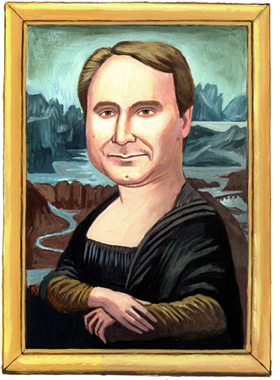
As I walked down the aisles of the men’s section in a huge Departmental Super Store, almost every casual T-shirt that I saw had some resemblance to a skull. I wonder how people’s tastes have drifted. People have begun to like even crave for anything that resembles evil. I remember the times when as kids we used to take pride in being called good and infuriated if anyone calls us bad. Now, people take pleasure in calling themselves bad. Skulls, and scary images are worn and showcased with pride. Movies without vampires are scarce. Homosexuality is considered a normal and anyone who questions it is looked at with contempt. Where is the world heading?
People take pleasure in ridiculing angels, why even God. There was a time when people never dared to raise a slanderous accusation against divinity. Freedom has given men the liberty to speak anything, scoff at anything.
As I watched the movie ‘Da Vinci Code’ I was taken aback to watch and hear the accusations on Christ. Utter blasphemy. Jesus continues His silence as in the days past when His own people ridiculed Him.
Immediately after watching the movie, I opened my Bible and out in front of me was the Book of Jude. In the very same way, these dreamers pollute their own bodies, reject authority and slander celestial beings. But even the archangel Michael, when he was disputing with the devil about the body of Moses, did not dare to bring a slanderous accusation against him, but said, "The Lord rebuke you!" Yet these men speak abusively against whatever they do not understand; and what things they do understand by instinct, like unreasoning animals--these are the very things that destroy them. V: 8-10
To get popularity and make quick money people go the extent of even abusing God. We dare not use God in vain. We need to be very cautious when we make statements about divine beings. Our own words can destroy us.
(Picture: Caricature of Dan Brown - the author of Da Vinci Code)
Monday, July 13, 2009
Does God permit War?

One of my friends reflecting on the ethnic strife in Sri Lanka posted a question on a Social Networking site, “Does God permit War?”
As I was reflecting on this question, I asked myself, “Are wars God made or man made?” Man has an instinct to create chaos and attribute the blame on God. This started in the Garden of Eden. The accusation goes like this “The woman YOU(meaning God) put in here with me – she gave me some fruit from the tree and I ate” (Gen 3:12) Whether we listen to our Heavenly Father or not, we strictly follow our forefather Adam. We continue to blame God for everything that we are responsible for.
Now why do wars occur?
Reasons may be many, but revolve around one “Lack of Love”
Oh! that each person would understand the meaning of the word LOVE. This is the key to counter the ravages of hatred, war and vengeance that we see all around us. No dictionary can give a better understanding of the word ‘Love’ than 1 Corinthians 13. You may believe that you are the most spiritual person on earth; you may move mountains; fathom great mysteries and speak the language of angels but hey stop there….if you do not profess Love, you are just a ‘chingu cha’- clanging cymbal. (Verses 1-3)
Solution: Unconditional Love.
If the solution to this issue is so simple why don’t people follow suit? Firstly they don’t try and even if they did, they fail because this cannot be done with one’s own strength. This is where the atheists/ realists fall back. Goodness without Godliness will not help. It is possible to practice this love only if God helps us set aside our own desires and instincts. Giving without expecting anything in return is the key to love. That’s exactly what Christ did on the cross. “But God demonstrates his own love for us in this: While we were still sinners, Christ died for us.” Rom 5:8. We have always taken this love for granted, not realizing its value till we are deprived of it. It is when God steps back and lets us take our decisions - waging war against ourselves, we stop to question if God exists and accuse Him of being a silent spectator.
Is more to come?
You will hear of wars and rumors of wars, but see to it that you are not alarmed. Such things must happen, but the end is still to come. Mt 24:6
When will this end?
And He will judge between many peoples and render decisions for mighty, distant nations. Then they will hammer their swords into plowshares and their spears into pruning hooks; Nation will not lift up sword against nation, and never again will they train for war. Micah 4:3
The Day is not far off. Amen Come Lord Jesus. Rev 22:20
Wednesday, April 22, 2009
'Master Plan' to Wipe-Out Christianity

Catholic bishops from the persecution ravaged state of Orissa warned this week that Hindu extremists have a “master plan” to wipe out Christianity in the remote eastern Indian state
n a letter to the state’s chief minister, Naveen Patnaik, the Indian bishops conveyed their concerns about the mass “exodus of Christians” from Kandhamal District and addressed the “considerable reduction” of refugees in relief camps, according to Catholic News Agency.
The bishops denied that the Christian refugees were leaving the camps to safely return to their homes. Most, they reported, are moving to relief camps in other areas such as in Bhubaneswar, Cuttack, Jhanla, Berhampur, or have moved into rented houses, homes of relatives, friends or acquaintances.
“It is estimated that 10,000 to 15,000 Christians of Kandhamal district are living outside the district,” the bishops wrote in the letter to the minister.
And while displaced Indian Christians want to return to their villages, they still fear being attacked on their way back or in the village themselves, the bishops added.
Another factor hindering the people’s return are reports of forced conversions. The bishops noted that details of forced conversions are taking place where Christians are pressured to choose to “accept Hindu Samskaras under oath and under pain of divine punishment.”
They are also forced to convert to Hinduism or forfeit the harvesting of their field. One man was even denied burial in his village because he was not a Hindu, the letter highlighted.
Another issue troubling the bishops is the fact that most of those who brutally attacked the Christians have not been brought to justice.
The state government have not arrested or brought the criminals to court, the bishops complained. Also, the government has not fulfilled their promises to allot land and money to the now homeless Christians.
Some 50,000 Christians have been displaced during the more than two months-long anti-Christian violence in Orissa. About 30,000 of the people are said to be living in refugee camps where the living condition is poor.
Christians and human rights activists in India and abroad have condemned the government for turning a blind eye to the violence that has gone on unabated since August and has even spread to several other Indian states.
Indian bishops in the letter contested allegations that the attacks are an ethnic conflict.
“Hindu Fundamentalist groups have been trying to name the communal violence as an Ethnic Conflict between the Tribals and the Pano Christians. A cursory look at facts reveals that this conflict is a calculated and pre-planned master plan to wipe out Christianity from Kandhamal district, Orissa, in order to realize the hidden agenda of Sangh Parivar of establishing a Hindu Nation,” they argued.
The bishop did, however, applaud the Orissa government’s decision to establish a Fast Track Court at Kandhamal to accelerate the trials of cases involving attacks against Christians.
The bishops requested to the Orissa minister that the judge of the court be of a religion other than Hindu or Christian to ensure fairness.
In addition to the request, the clergy also asked for the national police to remain in Kandhamal until after the parliamentary and assembly in Orissa, and for churches to be rebuilt or repaired by the first week of December in time for Christmas. “This will also help confidence building among the congregations and bury the past quietly as they approach Christmas 2008,” their letter concluded.
Thursday, March 26, 2009
National Integration at its best!
Muslim artistes from Rajasthan narrate Hindu epics
Bosco Dominique | Courtesy Times of India, March 25th, 2009
Puducherry: They’ve been singing songs and telling tales from the Ramayana for 19 generations — the Mewat Jogis are a group of Muslim performers from Rajasthan who travel across the country singing ballads from the Hindu epics.
In Puducherry to perform in a 15-day Ramayana festival hosted by the Adisakthi Theatre Arts Research Laboratory near Auroville, the group of seven used traditional instruments to sing devotional songs and enthralling ballads.
“With the Bhagawat Gita in our hands and the Koran in our hearts, we bring people together. Our goal is to pray for peace and happiness. We will be in Kabba and Kasi,” the group’s narrator and singer, 36-year-old Umar Faruk Jogi said.
Traditionally, Mewat Jogis from the Alwar-Bharatpur region of Rajasthan have been rendering the Hindu epics with the patronage of Hindus and wealthy landlords. The tradition is passed down to the next generation orally, and there are no written texts of the narrative content.
The group, led by narrator Sakoor Khan Jogi (68), presented ‘Lanka Chadai’, a narrative of the Ramayana. He was accompanied by Umar Faruk Jogi, singer Babu Nath Jogi (55) on the jogia sarangi, singer Nathi Ram Jogi (50) on the dholak, singer Nathi Khan Jogi (55) on the harmonium, and Mahmmod Khan Jogi (24) on the bhapang.
‘Lanka Chadai’ was composed by Mewat Islamic leader Nizamaat Meo about four centuries ago while ‘Pandun ke kade’, a narrative of the Mahabharata, which the group also performs, was composed by Mewat Islamic leaders Sadallah and Nabi Khan. “Sadallah has recorded that these verses were composed 1,797 years after the Mahabharata actually happened,” Umar Faruk said. These Jogis were nomads in the past but of late have settled in Rajasthan. Only a very few groups still keep the tradition of rendering tales of Hindu epics alive.
“Our content is simple and our style is lucid as the composers were not literary figures. The leaders composed dohas in common man’s language, in a simple and appealing way,” said Sakoor Khan Jogi, who knows more than 10,000 dohas by heart and is presently engaged in teaching the younger members of the group. He said they can render Hindu holy texts for 60 hours non-stop.
Bosco Dominique | Courtesy Times of India, March 25th, 2009
Puducherry: They’ve been singing songs and telling tales from the Ramayana for 19 generations — the Mewat Jogis are a group of Muslim performers from Rajasthan who travel across the country singing ballads from the Hindu epics.
In Puducherry to perform in a 15-day Ramayana festival hosted by the Adisakthi Theatre Arts Research Laboratory near Auroville, the group of seven used traditional instruments to sing devotional songs and enthralling ballads.
“With the Bhagawat Gita in our hands and the Koran in our hearts, we bring people together. Our goal is to pray for peace and happiness. We will be in Kabba and Kasi,” the group’s narrator and singer, 36-year-old Umar Faruk Jogi said.
Traditionally, Mewat Jogis from the Alwar-Bharatpur region of Rajasthan have been rendering the Hindu epics with the patronage of Hindus and wealthy landlords. The tradition is passed down to the next generation orally, and there are no written texts of the narrative content.
The group, led by narrator Sakoor Khan Jogi (68), presented ‘Lanka Chadai’, a narrative of the Ramayana. He was accompanied by Umar Faruk Jogi, singer Babu Nath Jogi (55) on the jogia sarangi, singer Nathi Ram Jogi (50) on the dholak, singer Nathi Khan Jogi (55) on the harmonium, and Mahmmod Khan Jogi (24) on the bhapang.
‘Lanka Chadai’ was composed by Mewat Islamic leader Nizamaat Meo about four centuries ago while ‘Pandun ke kade’, a narrative of the Mahabharata, which the group also performs, was composed by Mewat Islamic leaders Sadallah and Nabi Khan. “Sadallah has recorded that these verses were composed 1,797 years after the Mahabharata actually happened,” Umar Faruk said. These Jogis were nomads in the past but of late have settled in Rajasthan. Only a very few groups still keep the tradition of rendering tales of Hindu epics alive.
“Our content is simple and our style is lucid as the composers were not literary figures. The leaders composed dohas in common man’s language, in a simple and appealing way,” said Sakoor Khan Jogi, who knows more than 10,000 dohas by heart and is presently engaged in teaching the younger members of the group. He said they can render Hindu holy texts for 60 hours non-stop.
Subscribe to:
Posts (Atom)


